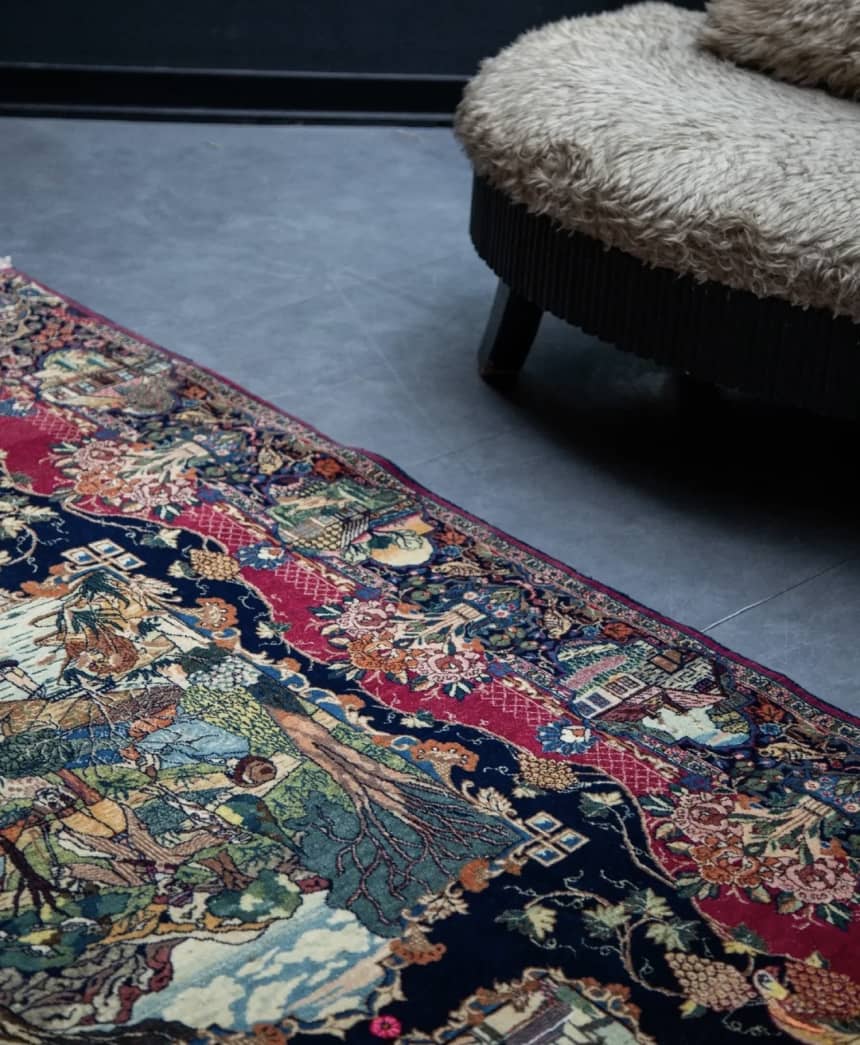
A rug like the ones this guide helps you value.
A hand-knotted rug's value is determined by five measurable pillars. Each one is assessed by the appraiser against published criteria and recorded as a standardized input; where the appraiser departs from the published tables, the departure, its size, and its reason are recorded on the report. This guide explains what appraisers look at — and how the RUG Index formula turns those assessments into a defensible, reproducible value.
A single rug has four different "correct" values depending on what the value is being used for. Confusing these is the most common mistake — and the reason many rugs are severely under-insured.
What the rug would sell for on the open market between a willing buyer and seller. This is the baseline value in the RUG Index formula — the number all other values derive from.
What it would cost to find and purchase a comparable rug at retail. This is significantly higher than resale because you're paying retail prices, dealer markups, and search costs. Insurance policies should be written at this value. Most rugs are severely under-insured because owners use resale value for coverage.
The price to purchase a comparable rug from a reputable dealer. Similar to insurance replacement but without the urgency premium.
What the rug would likely sell for at auction. Auction values are lower than resale because buyers at auction include dealers who need room for markup. Major auction houses (Christie's, Sotheby's, Skinner) achieve better results than local auctions.
Instant results · No account required
A rug like the ones this guide helps you value.
The RUG Index valuation tool gives you a solid estimate based on the five-pillar formula. For many purposes — deciding whether to sell, getting a general sense of value, or understanding what insurance coverage you need — an instant estimate is sufficient.
A certified RICA appraisal report is required when the value has legal or financial consequences: insurance claims, estate settlement, IRS charitable deductions, divorce proceedings, or when selling through a dealer or auction house that requires documented provenance. The report is signed by a RICA-certified appraiser, includes the appraiser's certification statement, and is formatted to meet documentation requirements commonly requested in court or before the IRS; acceptance is subject to individual requirements. The entire process is photo-based and remote — see how an online rug appraisal works.
To illustrate how the formula works in practice, consider a 9×12 foot Persian Tabriz rug in very good condition, approximately 60 years old, with a wool pile and a knot count of around 180 KPSI.
The base rate is $45 per square foot. For a 9×12 rug (108 sq ft), the base area value is $4,860. This is a conservative starting point before any quality multipliers are applied.
Tabriz is a Persian Workshop city and carries one of the higher entries in the origin table; the base area value is multiplied by it. For realistic ranges by weaving center, see rug value by type and origin; see the current Standard for the published multiplier.
Standard wool pile is the baseline material, so the running value is unchanged. Silk pile would carry the highest material multiplier. The differences between pile materials are covered in depth in our guide to wool, silk, and cotton rugs.
At 60 years old, this rug is in the semi-antique category (50–100 years) and receives that band’s age premium. Age must be verifiable — dye chemistry is one of the strongest indicators, as explained in natural vs synthetic dyes.
Very good condition with minor wear corresponds to Grade B, which steps the running value down from the full Grade A multiplier. How wear, stains, and repairs move a rug between grades is covered in rug damage and value.
At 180 KPSI, this is in the medium range (80–200), which carries its own knot-density multiplier. The base area value multiplied by all five pillar multipliers is the resale midpoint. For the number at each step, see the current Standard for the published multiplier, or run the same inputs through the Valuation Tool.
From the resale midpoint, the formula generates all four standard values: insurance replacement, retail replacement, resale market value (a range around the midpoint), and auction estimate. The insurance replacement value — a published multiple of the resale value — is what you need to insure properly. For each value context, see the current Standard for the published multiplier.